Acne-prone · Scars · Reactive Skin
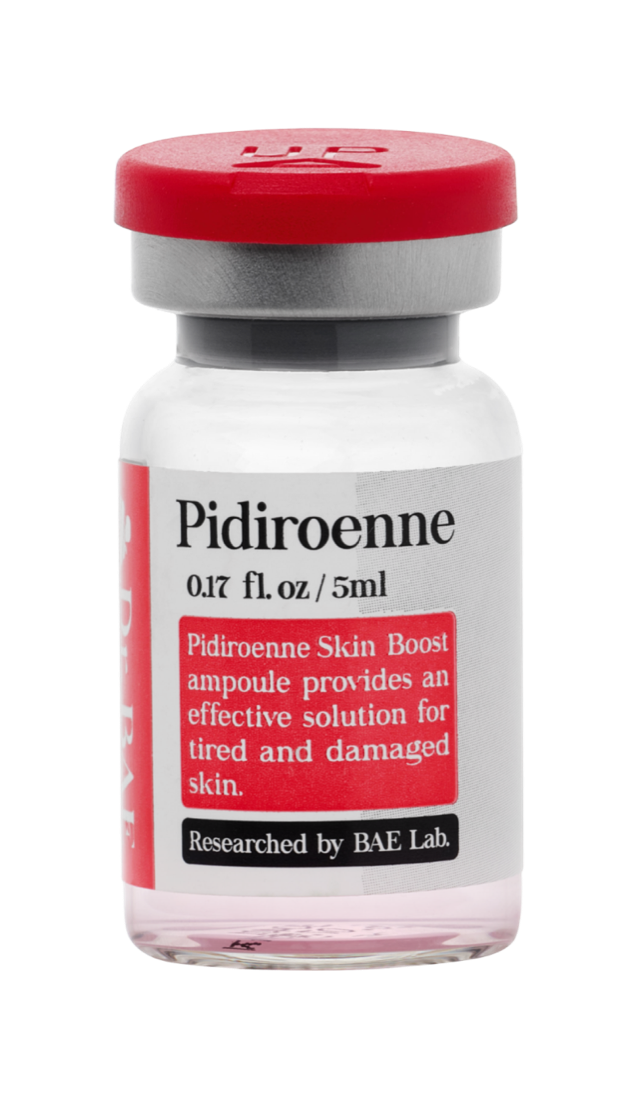
Pidiroenne
Plant PDRN (polynucleotide) booster · Patented Stable-PN · Calmer, clearer skin
From Sensitivity to Strength
PDRN booster with Stable-PN technology for problematic, reactive and scarred skin.
Why you'd ask for it
Regeneration for skin that fights back.
You've seen the “salmon DNA facial” results. Pidiroenne is BAE Lab's patented answer: a Stable-PN polynucleotide (PDRN) booster from Rose & Soy, lab-engineered for consistent results batch after batch — up to 80% improvement in the appearance of scars, visibly calmer redness on acne-prone, reactive and scarred skin. No fish origin, no allergy question.
In BAE Lab's clinic data, that's up to 80% improvement in the appearance of scars*.
Ask for it if: your skin is acne-prone, reactive, scarred, or recovering.
*Cosmetic results; individual results may vary.
Ask your clinic
“Can we add Pidiroenne to calm and regenerate?”
Send to my clinicRun a clinic instead? Offer it in your practice →
Clinical dossier · Pidiroenne
Stable-PN — PDRN (Rose & Soy)
Pidiroenne is a professional PDRN-based derma booster that uses BAE Lab’s patented “Stable-PN” technology. It combines lab-produced polydeoxyribonucleotide (PDRN) with propolis and other botanical actives for regeneration and the management of problematic skin.
Where common PDRN is salmon-derived and donor-variable, Stable-PN is lab-engineered from Amber Rose & Soy — consistent batch after batch, and free of the allergy and origin concerns of fish-derived material.
Indications
- Acne-prone / problematic skin
- Acne scars & texture
- Skin sensitivity & redness
- Compromised barrier
- Post-procedure recovery
In combination
- Problematic Skin Reset — Acne-prone & reactive skin
- Post-Procedure Recovery — Wound & scar healing
- Full Rejuvenation — Complete facial menu
Size
0.17 fl.oz / 5ml per vial
Actives
5+ botanicals + PDRN
Core technology
Stable-PN PDRN (Rose & Soy)
Classification
Cosmetic (EU / GCC compliant)
Biological mechanism
How it works, step by step
Receptor binding
PDRN activates A2A purinergic receptors in skin cells, triggering regeneration cascades.
Growth factors
VEGF production is stimulated; fibroblast proliferation increases at 20–100 µg/ml.
Multiple protection
Propolis provides antibacterial, antioxidant and immunomodulatory protection simultaneously.
Restoration
Trehalose + collagen protect cells and hydrate the deep layers — skin recovers from sensitivity to strength.
Active ingredients
5+ botanical actives + PDRN
“From sensitivity to strength” — PDRN and the microbiome solve skin problems by addressing the root cause.
- Amber Rose & Soy Bean PDRNRegeneration & angiogenesis
Tissue repair, anti-inflammatory, angiogenesis
Plant-sourced polydeoxyribonucleotide activates the A2A purinergic receptor, stimulating VEGF and angiogenesis, increasing fibroblast proliferation (measured at 20–100 µg/ml) and down-regulating pro-inflammatory cytokines — which is exactly why it suits reactive, acne-prone skin.
In synergy — Where PDRN calms and rebuilds the deeper matrix, propolis handles the microbial and inflammatory load on the surface — repair and protection in one pass.
- Propolis ExtractProtection
Antiseptic, antibacterial, wound-healing, immunomodulator
Delivers antibacterial, antioxidant and immunomodulatory action simultaneously — reducing the microbial and inflammatory burden that drives acne and slows healing.
In synergy — Protects the tissue PDRN is regenerating, so repair happens in a controlled, low-inflammation environment.
- TrehaloseCellular protection
Hydrates the cell surface, protects cellular stability
A bioprotectant sugar that stabilises the cell membrane and preserves cellular structure under stress, holding water at the cell surface.
In synergy — Keeps cells stable and hydrated through the regeneration PDRN drives — protecting the very cells being asked to proliferate.
- Hydrolyzed CollagenMatrix hydration
Deep hydration, water binding (low molecular weight)
Low-molecular-weight collagen peptides bind water in the deeper layers and support the extracellular matrix scaffold that regenerating tissue rebuilds on.
In synergy — Supplies matrix substrate while PDRN and fibroblasts do the remodeling — hydration plus structure.
Origanum Vulgare Extract
ProtectionAntiviral, antifungal
Adds antiviral and antifungal protection, broadening the antimicrobial defence around compromised, reactive skin.
In synergy — Complements propolis to keep the barrier defended while it recovers from sensitivity to strength.
Clinical benefits
What the protocol delivers
Tissue regeneration with PDRN
Activates A2A receptors, stimulates VEGF and increases fibroblast proliferation.
Anti-inflammatory & antibacterial
Propolis delivers 8+ therapeutic properties in a single ingredient.
Treats the root cause
Repairs the compromised barrier behind the sensitivity, not just the flare-up in front of you.
Treatment protocol
- Methods
- Topical application, mesotherapy
- Duration
- 8–12 weeks · 2 sessions per week
- Areas
- Acne-prone areas, scar tissue, sensitive / reactive skin, face
Results timeline
Week 1–2
Reduced redness, calmer skin, initial comfort.
Weeks 4–8
Texture improvement, reduced sensitivity, barrier repair.
Weeks 8–12
Scar improvement, resilient skin, long-term strength. — up to 80% improvement in the appearance of scars*
In combination it goes further — the same protocol data, across the pairings clinics run most:
Up to 80% improvement in post-acne mark appearance with a full protocol*
Pidiroenne + Exotokine
Up to 70% reduction in visible redness after the protocol*
Pidiroenne + Exotokine
*Cosmetic results; individual results may vary.
Specifying Pidiroenne for your clinic? Add it to a protocol and send the composition to Allure Beauty for pricing and onboarding.